

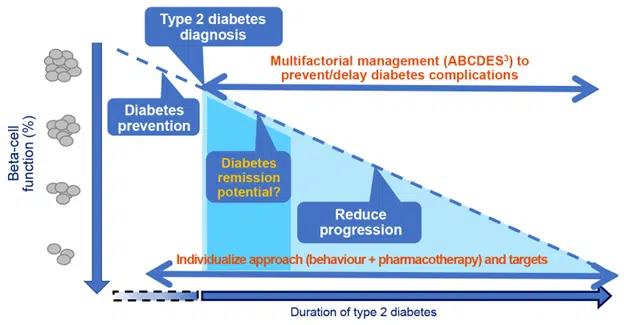
In this blog series on the realities of Type 2 diabetes remission, I have discussed the basics on how the body processes food, the realities around why people develop diabetes, and why diabetes treatments have not been able to help most individuals achieve diabetes remission. Here I want to wrap up the discussion with reviewing Diabetes Canada’s position on diabetes remission and why I believe pharmacological remission will eventually be an identified remission treatment option.
How Do You Define Diabetes Remission
Diabetes Canada has defined diabetes remission as achieving an A1c target without any anti-hyperglycemic medications/diabetes treatments for a minimum of three months. We know that an A1c test reading between 6.0-6.4% is diagnosed as prediabetes, and above or equal to 6.5% is diagnosed as diabetes. Diabetes remission is achieving an A1c under 6%.
Source: Diabetes Canada Quick Reference Guide
Diabetes Canada also notes that achieving remission is more likely for certain individuals:
- Individuals who are more recently diagnosed, less than six years ago,
- individuals who have obesity who can lose weight,
- those who have close to normal blood sugar levels,
- and those who are not already on insulin treatment.
Approaches to Diabetes Remission
When Diabetes Canada was working on a remission chapter, they looked at literature from around the world to see if there was evidence that remission was possible. What they found was that there was evidence of two main ways (evidenced in the diabetes literature) to achieve remission: surgical intervention and a very low-calorie diet. It has been known for years that individuals who undergo bariatric surgery (aka gastric bypass surgery) have higher rates of diabetes remission. Very low-calorie diets are difficult to follow, difficult to maintain long-term, cost prohibitive for many, promote increased appetite through hormone signalling, and increase an individuals risk of malnutrition and disordered eating. You can read more about diabetes remission in the clinical practice guideline chapter and remission users guide listed in the references.
Pharmacological Diabetes Remission
Many people might ask “is diabetes really in remission if you have to use medicine to get there?” I believe that notion comes from the belief that people bring on diabetes themselves and therefore they should get healthy themselves too. Consider that if you’re thyroid is under active or not making enough thyroid hormone as it should, and you supplement with thyroid hormone, you are correcting the issue with a pharmacological intervention. The diagnosis of Type 2 diabetes has been very stigmatising for individuals as a lifestyle condition. Now that we know more about what is happening in the body of an individual with diabetes, we can see that it is a complex condition with required treatment options often outside of the individual’s control. I see pharmacological options as a way to help people be healthy and achieve health in a long-term way.
Now I look forward to seeing how the literature changes in years to come.
I’d love to hear your thoughts on diabetes remission. Come join me in our Community of Learning on Facebook!
References
- Diabetes Canada Clinical Practice Guidelines Expert Committee Special Article Remission of Type 2 Diabetes https://guidelines.diabetes.ca/cpg/special-article-remission-of-type-2-diabetes
- Diabetes Canada Clinical Practice Guidelines Expert Committee Remission of Type 2 Diabetes Users Guide https://guidelines.diabetes.ca/cpg/sa-remission-of-type-2-diabetes-users-guide